The Nightmare of Varicose Patients: Compression Stockings
Do you suffer from varicose veins like millions of people? If so, you probably have complaints that change your quality of life, such as pain, edema, heaviness in the legs. Maybe you have bulging veins and you know these veins can cause serious health problems such as thrombus formation and venous ulcers in the future. We are here to reduce your risks and alleviate your complaints. This is where compression stockings come into play.
What are Compression Stockings?
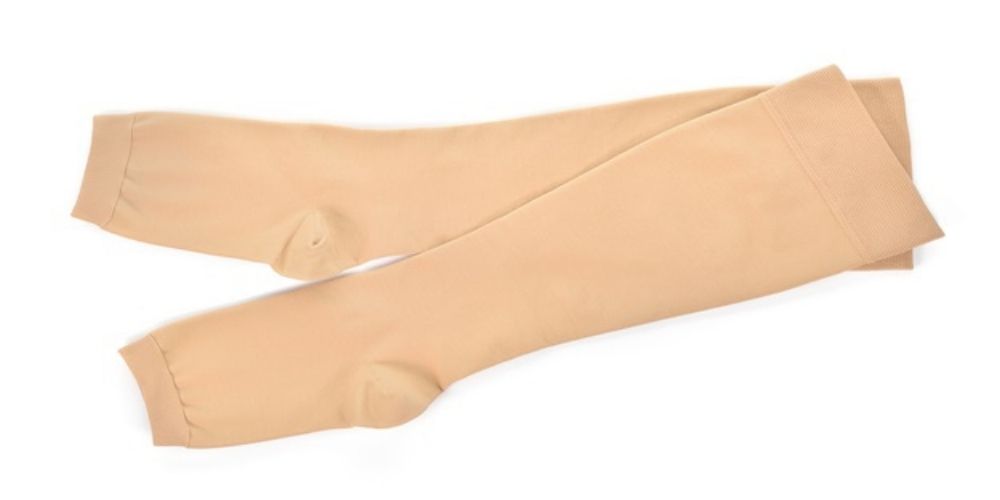
Compression stockings, are aids developed to apply pressure to your legs. The pressure created will help regulate your circulation, thereby reducing your pain and edema. In general, the pressure, which is at the highest level around the ankle, decreases gradually as you go up. The good news is it's no longer in the thick brown nylon canvas form your grandmother used to wear.
With the developing technology, thin, beautiful, even fashionable socks are available. The stockings in the market are available in different forms and colors as below the knee, above the knee, crotch and pantyhose.
Compression Stockings; What do they do?
As we explained in the formation of varicose veins, unfortunately, the venous system lacks a heart and has to move passively upwards towards the heart against gravity. For this reason, there are valves in our veins. The blood will not return to the heart at a sufficient level in vein and valve dysfunctions that occur in cases of insufficiency. Instead, it will be pooled in the leg, wrist and foot. Compression stockings will support your leg health by providing a suitable, constant and continuous pressure at this stage. Thanks to the applied external pressure, the blood will move more easily in the vein, the circulation will be improved and the ponding in the legs will be prevented. In this way, ponding and the edema it causes, heaviness in the legs, fatigue and pain will disappear.
When Should I Wear Compression Stockings?
If you are in a risk group, that is, if you have one or more of the following, we recommend that you consult your cardiovascular surgeon and use compression stockings.
- Family history
- Female gender
- Obesity
- Over 60 years old
- Pregnancy
- Sedentary life
- Sitting for long periods of time
- Working for long periods of time.
It is recommended not only for those in the risk group, but also for leg swelling, long journeys, athletes to protect or reduce pain.
What are the Benefits of Compression Stockings and How Should I Use It?
Compression stockings are the simplest and most affordable protective method that can be easily found everywhere for patients with a risk group or diagnosis. However, one of the important points is that they should be properly pressurized and used consciously. For this purpose, I will seek answers to a few frequently asked questions.
How Should I Wear?
Your doctor will prescribe you the most suitable socks. The socks you receive should wrap the foot, ankle and leg well. It should not be wrinkled, it should be folded. Especially below the knee, above the knee and in the crotch type socks, as the folds from the upper elastic area are very common, they should definitely be avoided. Because such curls disrupt your circulation and harm you as well as removing the socks from its purpose. Unless your doctor recommends otherwise, compression stockings are normally worn before getting out of bed in the morning, after your legs are lifted upwards and emptied in the direction of gravity for a few minutes, they stay on the leg all day and are removed when we go to bed at night.
Which Size?
Compression stockings are measured with pressure, ie mmHg. Low numbers indicate low pressures and high numbers indicate high pressures. Your doctor will determine the socks that are suitable for you and for your intended use. If your intended use is a previous deep vein thrombosis or a high risk of deep vein thrombosis, a high pressure stocking will be recommended to you. Antiembolic stockings with the highest pressure will be recommended after long hospital stays and major surgeries. If our intended use is varicose veins, that is, chronic venous insufficiency, the socks we will prefer will be medium pressure stockings. Stockings, which we call resting or low pressure, will be given to patients who do not have a diagnosed disease but have symptoms similar to venous insufficiency.
Stockings according to pressure degrees:
- Low grade (8-15 mmHg) is recommended for those who stand for a long time, pregnant women, and those with mild leg edema.
- Medium stockings (15-25 mmHg) are suitable for the relief or prevention of complaints in this group, patients with venous insufficiency. It is recommended for long-term travel, patients at risk of DVT and after venous surgeries.
- High-pressure stockings (25-35 mmHg) are recommended for patients with orthostatic hypotension, as well as for patients with severe edema or DVT after some venous surgeries.
- Extra tight stockings (35-45mmHg) can also be used for severe venous insufficiency, edema, DVT risk, orthostatic hypotension.
Will Compression Stockings Treat My Varicose Veins?
The answer to this question is definitely NO. Compression stockings are not curative for venous insufficiency. Its main purpose is to relieve complaints, slow down the course of the disease and increase the quality of daily life. Compression stockings have absolutely no therapeutic effect.
Can Everyone Wear Compression Stockings?
The answer to the question is also NO. If you have one of the following diseases or complaints, you should definitely consult your doctor.
- Congestive heart failure
- Septic phlebitis
- Advanced arterial disease and circulatory disorders in the legs
- Skin infections
- Peripheral neuropathy
- Allergies
- Dermatitis
What Size Should Compression Stockings Be?
The most preferred type of stockings is below the knee. Studies have shown that knee-high stockings are sufficient for protective purposes. However, if you have a widespread insufficiency diagnosed by ultrasonography along the entire leg, it is also beneficial to wear crotch type or pantyhose. Take your stockings in line with the recommendations of our doctors.
Should I Wear Compression Stockings While Doing Sports?
The answer to this question is definitely YES for patients in the risk group and with ultrasonography-proven venous insufficiency. In the worst case scenario, you can wear your daily socks recommended by your doctor, as there are compression stockings specially manufactured for sports purposes.
How Should Compression Stockings Be Washed?
Remember, compression stockings are a medical product and are adjusted for pressures that go upwards from the ankle. For this reason, it should be washed with care, in a special way. When I tell these to my patients, I say you should wash them like you would a wool sweater. In other words, it should be washed in warm water with gentle movements without rubbing it, and it should be dried at room temperature, without wringing it too much, by laying it on a towel as if drying a wool sweater. It should never be dried in a dryer, heater or under the sun. In applications made in this way, the compression stocking will immediately lose its feature and its life will be shortened, so you will not be able to notice it, since nothing visually to have changed. Regardless of the conditions used, I recommend my patients to buy 2 socks for washing and to change them every 6 months.